Cloud Cost Management Tools: A Comprehensive Guide
- Avinashh Guru
- May 30, 2025
- 2 min read

As businesses increasingly rely on cloud infrastructure, managing and optimizing cloud spending has become a top priority. Cloud cost management tools empower organizations to monitor, analyze, and control their cloud expenses, ensuring efficient resource utilization and maximum return on investment.
What Are Cloud Cost Management Tools?
Cloud cost management tools are software solutions designed to give organizations visibility and control over their cloud spending. They help monitor usage patterns, analyze cost trends, and provide actionable recommendations for cost reduction and resource optimization. These tools support budgeting, forecasting, anomaly detection, and cost allocation, making them essential for financial governance in the cloud era.
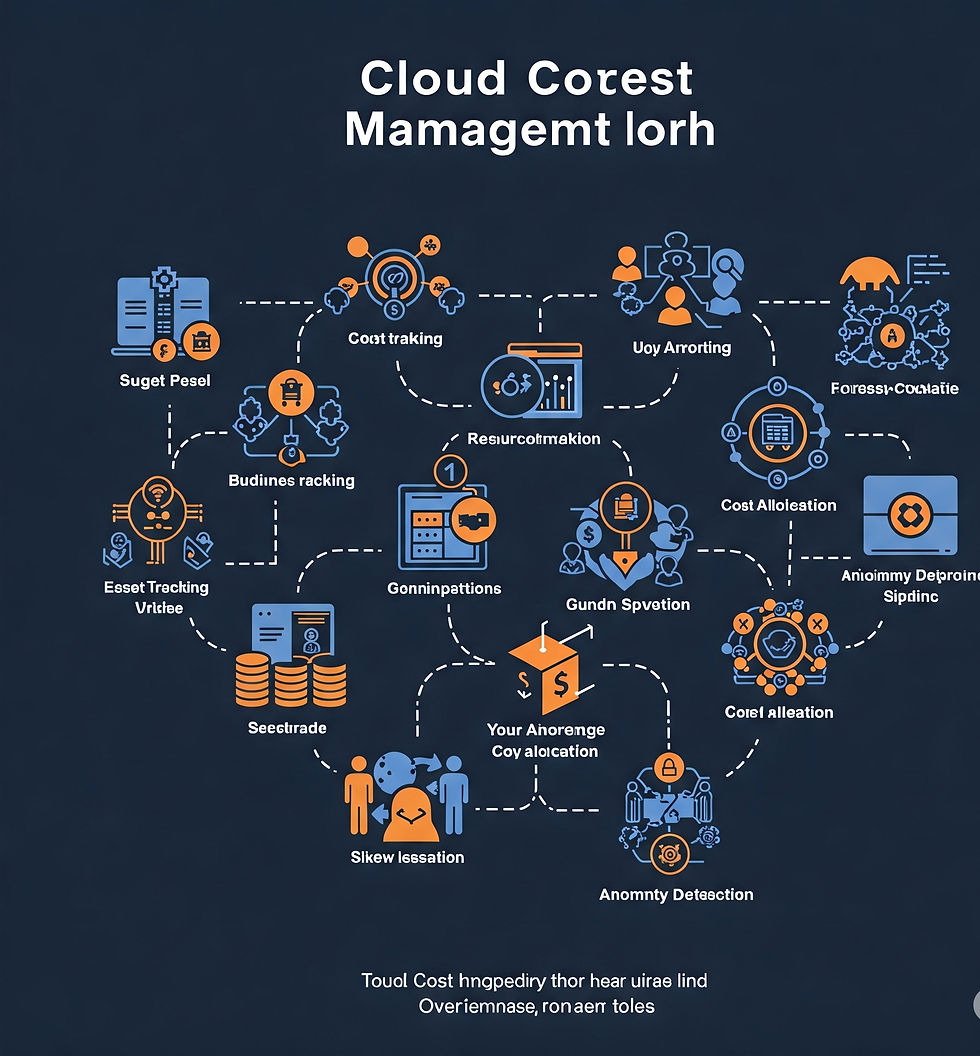
Key Features of Cloud Cost Management Tools
Real-Time Cost Monitoring: Instantly track cloud spending to identify unexpected spikes and stay within budget.
Cost Allocation & Chargeback: Attribute costs to specific departments, projects, or teams for granular accountability and better financial planning.
AI-Driven Recommendations: Leverage artificial intelligence to identify idle or underutilized resources, suggest right-sizing, and recommend savings plans.
Budgeting & Forecasting: Set budgets, receive alerts, and use historical data to predict future expenses, enabling proactive financial management.
Anomaly Detection: Automatically flag unusual spending patterns or cost spikes for immediate investigation.
Resource Optimization: Identify and eliminate waste by rightsizing resources, removing unused assets, and optimizing reserved instance purchases.
Multi-Cloud Support: Manage costs across AWS, Azure, Google Cloud, and other platforms from a unified dashboard.
Customizable Dashboards & Reporting: Create role-specific reports and dashboards for engineering, finance, and management teams
Leading Cloud Cost Management Tools in 2025
Tool | Unique Strengths |
CloudZero | Deep cost breakdowns (per customer, team, feature), real-time allocation, actionable insights. |
IBM Turbonomic | AI-powered optimization, full-stack visibility, automated resource management. |
CloudBolt | End-to-end automation, AI/ML insights, governance for multi-cloud and Kubernetes environments. |
Google Cloud Cost Management | Integrated budgeting, cost recommendations, detailed reporting, and alerts. |
AWS Cost Explorer | Native AWS integration, cost analysis, forecasting, and optimization recommendations. |
Azure Cost Management | Budgeting, forecasting, integration with Azure tools, and reserved instance optimization. |
Economize | Predictive analytics, automated anomaly detection, AI-driven recommendations |
How Cloud Cost Management Tools Reduce High Cloud Spend
Prevent Overprovisioning: By analyzing usage patterns, these tools recommend right-sizing or shutting down idle resources, preventing unnecessary costs.
Automate Optimization: Automated actions such as resizing VMs or scheduling workloads ensure resources match demand.
Enable Accountability: Cost allocation and chargeback features make teams responsible for their own cloud spending, promoting cost-conscious behavior.
Forecast and Plan: Advanced forecasting helps organizations anticipate future costs and adjust budgets proactively.
Detect and Act on Anomalies: AI-powered anomaly detection flags unusual spending, allowing for immediate corrective action.
Why Invest in Cloud Cost Management Tools?
Implementing a robust cloud cost management solution leads to:
Enhanced financial clarity and governance
Improved collaboration between engineering and finance
Reduced waste and optimized resource allocation
Proactive cost control and prevention of budget overruns
Better alignment of cloud spending with business objectives
Cloud cost management tools are essential for any organization seeking to maximize the value of their cloud investments. By offering real-time visibility, actionable insights, and automation, these tools help businesses stay agile, efficient, and financially responsible in an ever-evolving cloud landscape.


Comments