Data Mining: What It Is, How It Works, and Why It Matters
- maheshchinnasamy10
- May 8, 2025
- 2 min read
Introduction:
In today’s digital world, businesses generate an overwhelming amount of data — from customer transactions and website interactions to social media engagement. But data alone isn't valuable unless it can be transformed into actionable insights. That’s where data mining comes in.
In this guide, we'll break down what data mining is, how it works, and why it’s an essential tool for businesses of all sizes.

What is Data Mining?
Data mining is the process of discovering patterns, trends, and insights from large sets of data using statistical, machine learning, and database management techniques. It helps organizations make informed decisions, predict future trends, and understand customer behavior.
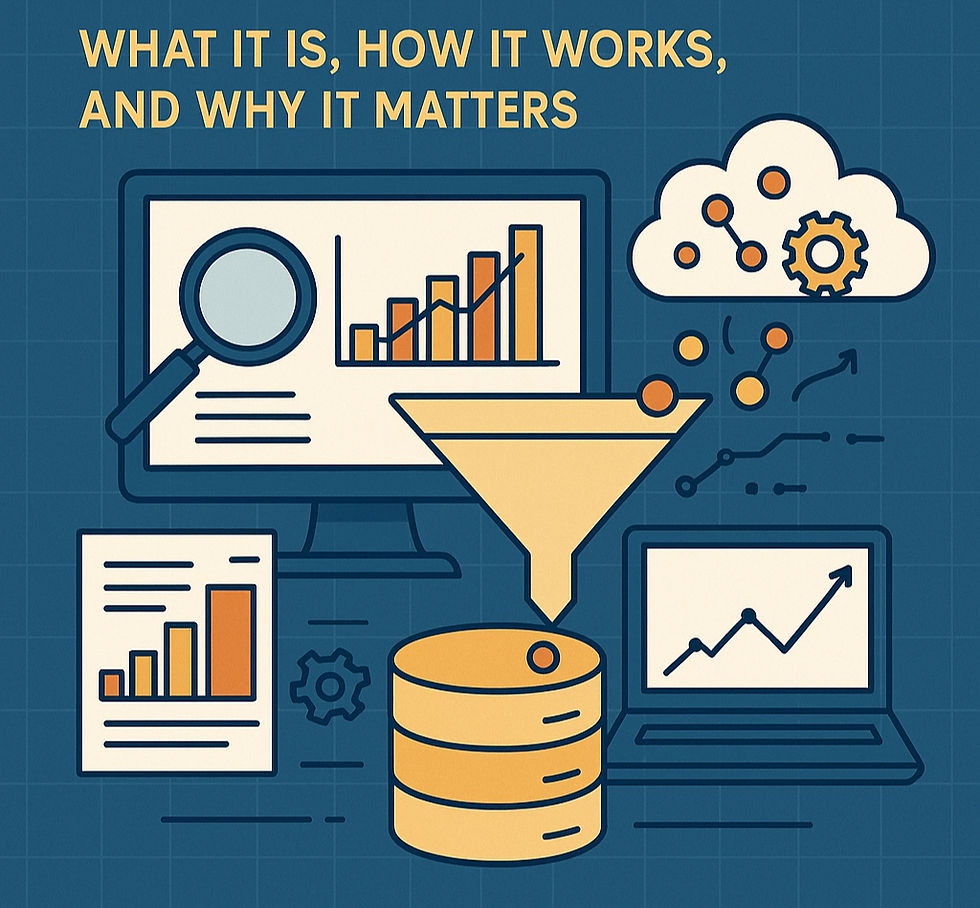
How Does Data Mining Work?
The data mining process typically involves several key steps:
Data Collection: Gather data from multiple sources such as databases, cloud services, websites, and social media.
Data Cleaning: Remove duplicates, errors, and irrelevant information to ensure accuracy.
Data Integration: Combine data from various sources into a single, unified view.
Data Analysis: Apply algorithms and statistical models to identify patterns and trends.
Pattern Evaluation: Filter out insignificant patterns and focus on valuable insights.
Knowledge Presentation: Present findings through reports, dashboards, and visualizations.
Popular Techniques in Data Mining:
Some commonly used data mining techniques include:
Classification: Sorting data into predefined categories.
Clustering: Grouping similar data points together.
Association Rule Learning: Finding relationships between variables (like market basket analysis).
Regression: Predicting a continuous value based on historical data.
Anomaly Detection: Identifying outliers or unusual patterns.
Why is Data Mining Important for Businesses?
Whether you're running a small eCommerce shop or managing a multinational enterprise, data mining can deliver immense value:
Enhances Decision-Making: By uncovering trends and predicting outcomes.
Improves Customer Experience: Through personalized marketing and recommendations.
Optimizes Operations: Identifying inefficiencies and streamlining processes.
Boosts Competitive Advantage: By keeping you ahead of market trends.
Conclusion:
In an age driven by data, mining it effectively can unlock opportunities you never knew existed. With accessible tools and platforms (many of which integrate smoothly with your Wix website), even small businesses can harness the power of data mining to improve decision-making and grow smarter.
Ready to start digging for your business insights? The data is out there — you just need to uncover it.


Comments