Security in Serverless Applications
- maheshchinnasamy10
- Jun 14, 2025
- 2 min read
Introduction:
As cloud-native development evolves, serverless computing has emerged as a game-changer, enabling developers to focus on code without managing infrastructure. However, as with any innovation, serverless introduces unique security challenges. In this blog, we'll explore the security implications of serverless architectures and offer best practices to safeguard your applications.

What is Serverless Computing?
Serverless computing allows developers to run code in response to events without provisioning or managing servers. Popular platforms include:
AWS Lambda
Azure Functions
Google Cloud Functions
While “serverless” doesn't mean no servers, it means that server management is abstracted away by the cloud provider.
Why Security in Serverless Matters:
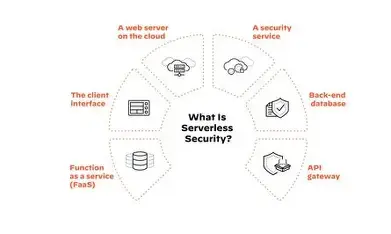
Serverless apps often involve microservices, third-party integrations, and event-driven triggers, increasing the attack surface. With server management offloaded to cloud providers, traditional security models—like perimeter firewalls or patch management—don't directly apply. This shift requires a rethinking of application-layer and function-level security.
Common Security Risks in Serverless Architectures:
1. Function Event Injection:
Serverless functions are triggered by events like HTTP requests, file uploads, or database changes. Maliciously crafted events can exploit vulnerabilities (e.g., injection attacks) in your function code.
2. Over-Privileged Roles:
Serverless functions often run with cloud IAM roles. If those roles are too permissive, attackers can escalate privileges or access sensitive resources.
3. Third-Party Dependencies:
Most serverless functions rely heavily on third-party libraries. Unpatched or malicious dependencies can introduce security vulnerabilities.
4. Insecure Configuration:
Misconfigured environment variables, improper CORS settings, or lack of encryption can expose sensitive data.
5. Denial of Wallet (DoW):
Attackers may trigger functions in a loop to generate high usage, increasing your cloud costs—a unique form of denial-of-service.
Best Practices for Securing Serverless Applications:
1. Principle of Least Privilege (PoLP)
Ensure each function has only the permissions it needs. Use fine-grained IAM policies to limit scope.
2. Input Validation and Sanitization
Always validate incoming data. Use parameterized queries and secure coding practices to avoid injection attacks.
3. Secure Third-Party Dependencies
Regularly scan dependencies using tools like Snyk, npm audit, or OWASP Dependency-Check.
4. Use Environment-Specific Configs
Avoid hardcoding secrets. Instead:
Store secrets in AWS Secrets Manager, Azure Key Vault, etc.
Use environment variables securely.
5. Monitor and Audit Function Activity
Enable detailed logging and monitoring using services like:
AWS CloudTrail, CloudWatch
Azure Monitor
GCP Stackdriver
6. Apply Runtime Protection
Use solutions that provide real-time threat detection at the function runtime level. Tools like Datadog, Lumigo, or AWS GuardDuty can help.
7. Enable Transport Layer Security (TLS)
Ensure all communication between services and APIs is encrypted using HTTPS/TLS.
Conclusion:
Serverless architecture simplifies development and scaling—but it does not eliminate security responsibilities. By adopting secure coding practices, enforcing least privilege, and leveraging cloud-native security tools, teams can build robust serverless applications that are both scalable and secure.


Comments